So, sorry for not writing for so long. I've kinda lost my steam.
About three weeks ago I caught a cold. This is not unusual for me. I usually get three of four colds a year, so when I came down with one here, it was annoying, but not unexpected. It was a rather bad cold and I was miserable. In America I can just go to the store and buy what I want or need. Here everything is in Japanese (oddly enough!) and Japanese just go to the Hospital and get a prescription. That's right, you read correctly. Japanese people go to the hospital for a common cold. They have required health insurance here, and there is no deductible. So if they feel the least bit off they hurry to the doctor who meets with them briefly and then prescribes them some medicine. If you have allergies you go to the hospital. If your leg hurts you go to the hospital. So when I caught my cold all the Japanese people urged me to go to the Hospital.
Being American, I would never go to the Hospital to be told what I already know. As a matter of fact I probably wouldn't go unless I were bleeding profusely, had been ill for some time, or was in danger of dying. Needless to say I was somewhat shocked when being repeatedly urged to go to the doctor. My insurance has a deductible, I would have to pay for it myself.
My host mom got so worried that she called the School to have them talk to me. I was informed that I needed to get some medicine. Usually I will take some vitamin C, zinc, and Nyquil at night to help me sleep. Nyquil being illegal here I had to forgo it, then I will just suffer through the rest of the symptoms. I had been wearing a mask (as is expected in Japan) to prevent the spread of germs. (Masks are terribly hot.) I shared my view of the situation with the lady at the school, and she told me a story about a time when she had had allergies and had gone to the Hospital to get medicine so that her co-workers would not need to be discountanced by her sneezing. Her point being that my cold was inconveniencing those around me so I had better get some medicine to hide it. My response to that situation would have been that I was the one suffering and they should feel sorry for me, not annoyed. I was also required to return the next day to prove that I was improving, and if not improving I would be required to go to the Hospital. Being the good international student that I was I then determined to buy some medicine. I went to get some medicine at the drug store then realized that I didn't have enough money, Oops!
Fortunately for my bank account I was somewhat better the next day. I went to the drug store and got some cough medicine the next day. It was very effective, and when I didn't take the medicine some days later I coughed all day. I guess that I felt a bit miffed that I was the sick one and I have to be the one to think about those around me. It's selfish, I know, but it was how I felt. It seems to be to be a good attitude to have, but I am not sure that I want others to expect it from me. In Japan, I feel that there is a lot of behavioral expectation projected onto people. I find it a bit oppressive, a whole culture that guilts people into doing what is expected.
Hmmm.
Thursday, November 18, 2010

Thursday, November 4, 2010
Transportation
So, if you want to go anywhere you need to know how to use the buses and trains. I would say that the most important thing to know is the stop you want to get to. I am going to start with the bus since you need to take the bus to get to the train from KG.There is a bus stop right outside of the front gate of KG. The one to the left as you exit KG goes away from Hirakata Station.
 If you want to go to Hirakata station you need to go right and cross the street. The stop is in front of a Indian restaurant on the corner with stop lights. There is a bus schedule at the stop. These schedules are in kanji so if you can learn the kanji for the place you want to go it is very helpful. The main thing is that it tells you when the bus is comming.

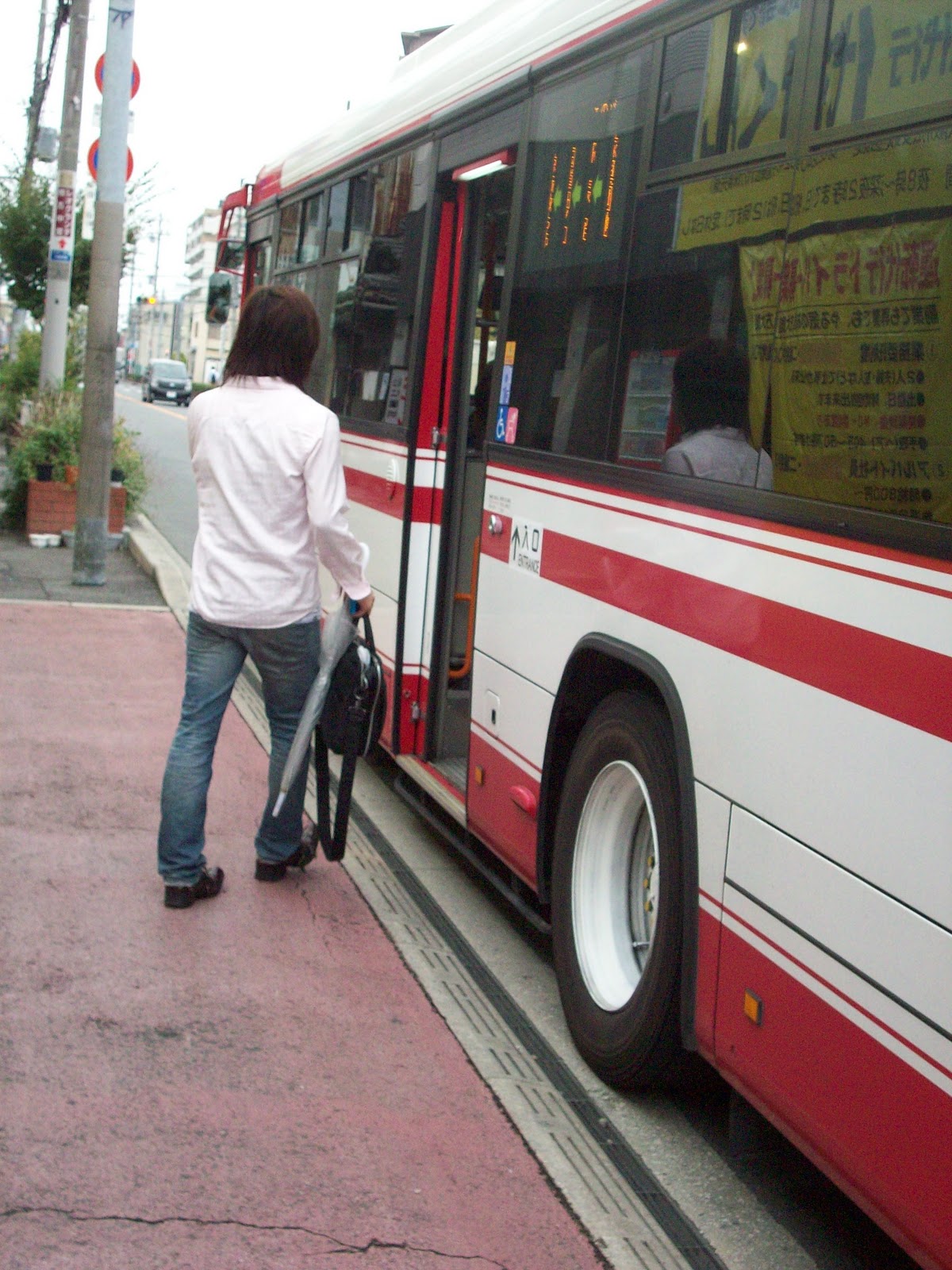
The building in the background is Kansai Gaidai. When the bus comes you get in the rear door.
 When you get to your destination The bus to Hirakata costs 220Y. There is a machine that you put your money into when you get off. You must put exact change into the machine. Fortunately this machine also doubles as a change maker.

 At Hirakata you get off at the end of the line so you don't really need to know the stop, but if you go anywhere else you have to listen for it. When you hear it you push the button. The button is everywhere. It is generally a good idea to not be loud in the bus or train.
When you get to the Train station you can find stairs and go up. There are two ways to get to the train. One end is smaller, and on the north end. The larger one is south. There are many stores in the station. From what I have seen most major stations double as a sort of shopping center. When you find the gate there will be a ticket place close by.
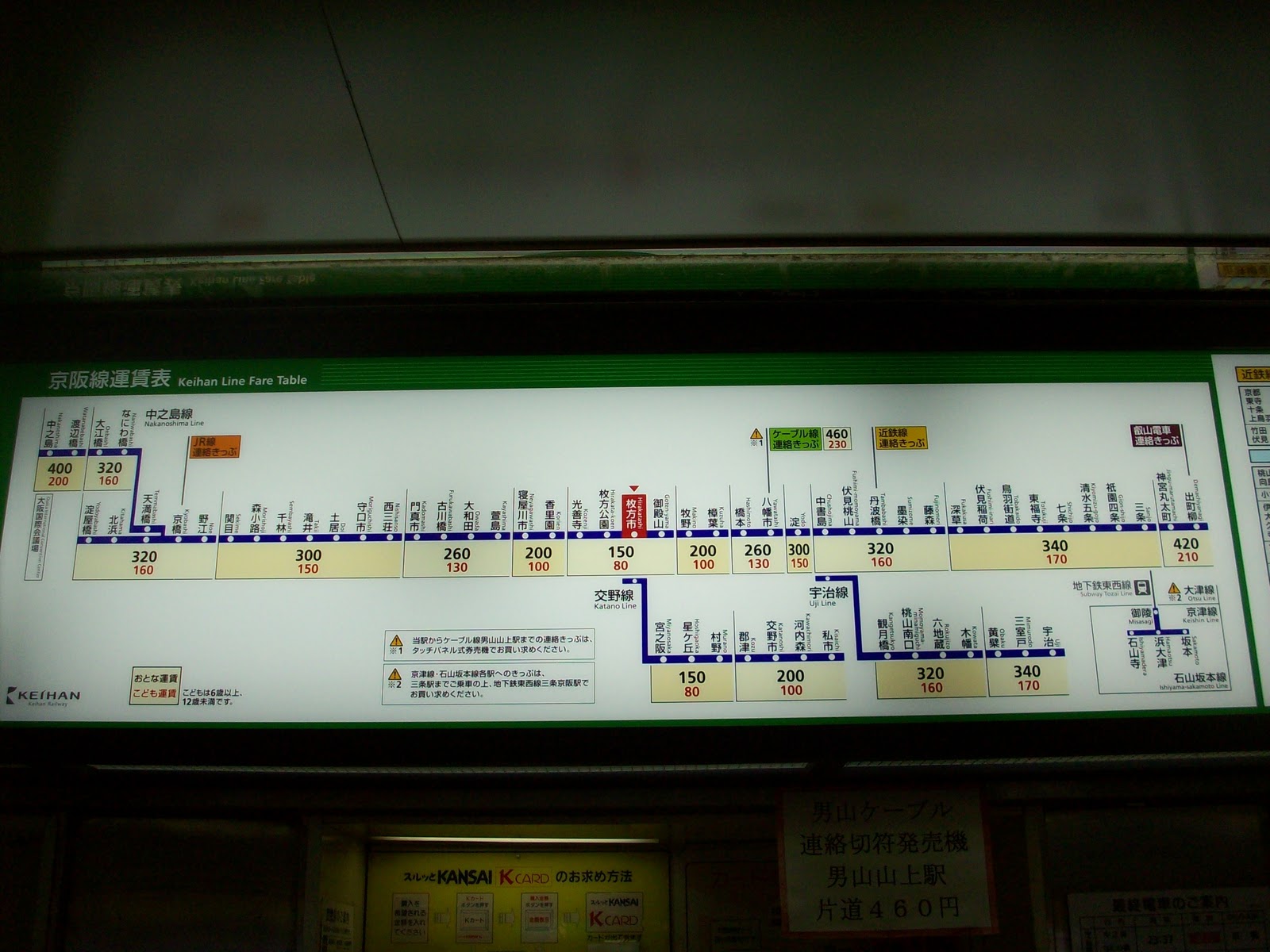
 This one is to the left of the gates. Above the machines is a train map of the stops and how much you need to buy the ticket for.
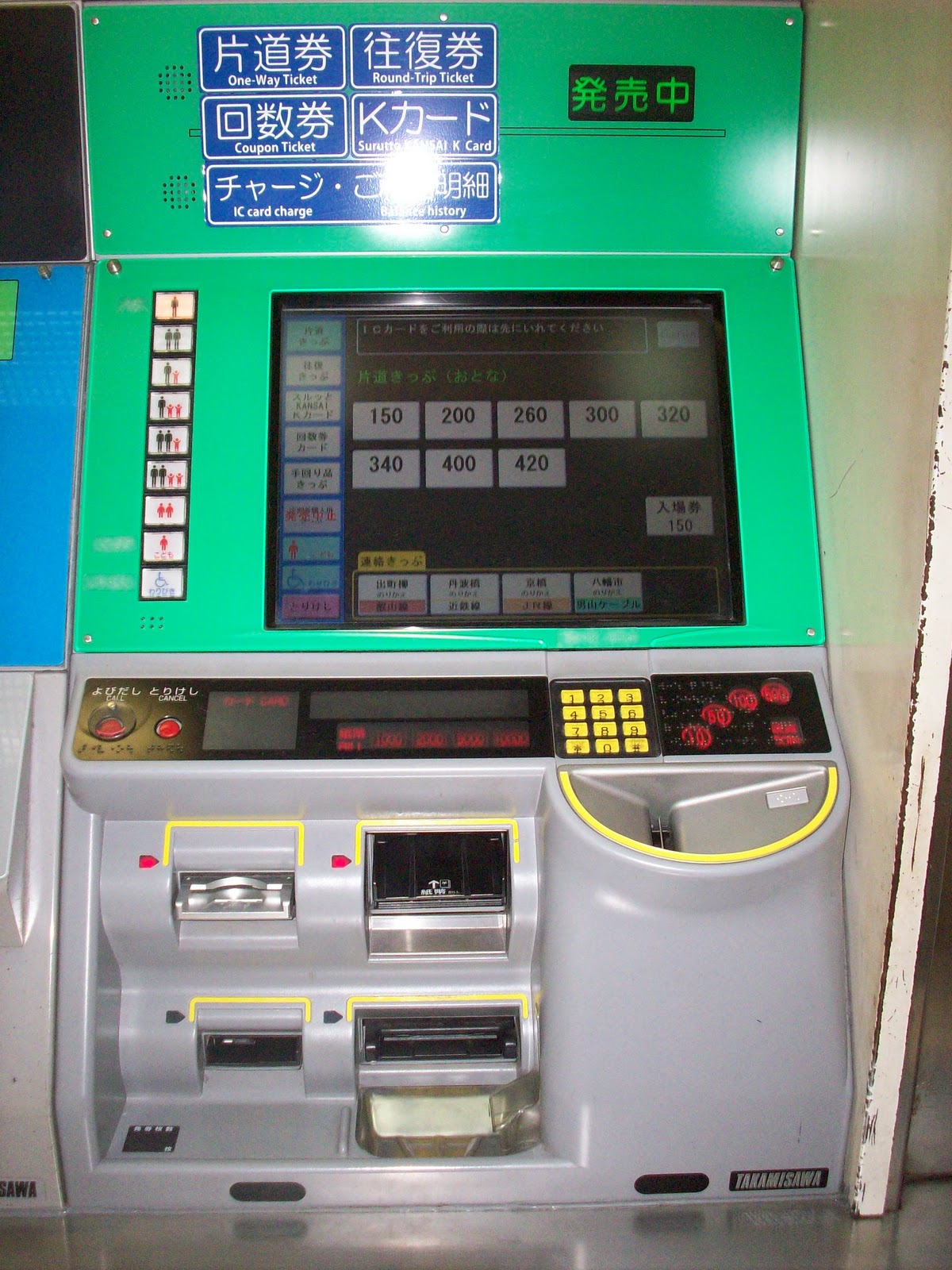
 So you pick a stop and look at the box below the stop and you put at least that much money in the machine. The ticket buttons will light up and you push the one for the amount that you want.
 It will then spit out a ticket and your change.
You then go through the gate which you feed your ticket through and it spits the ticket out the other side. Grab your ticket! You will need it to get back out.

 You then go up (in this case) to the train platform. On the platform is a sign that tells what kind of train stops at which stations. There are various speeds of trains. The slowest that stops at all of the stations is the Local. The fastest which only stops at the big stations is the Limited express. Fortunately these are in romanji (or English) so you can read it.
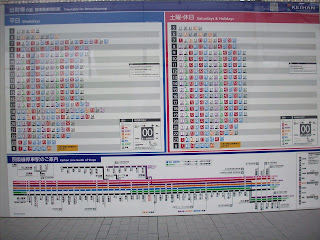 There are signs that indicate the next two trains that are coming on a track. The trains are color coded according to the sign and train. Handy! :)

When the train comes you just walk on, then you have to listen for your stop. If you miss your stop all you have to do is get off and take the next train back to your stop. Sometimes this involves talking to the man at the ticket booth who will stamp your ticket then you can go the the other gate and show it to the other ticket man. Remember your desired destination name, it makes everything so much easier. When you get to where you want to go you get off and go to the gate (which is usually found by following the crowd), and you put your ticket into the machine which eats it. If you haven't paid enough you have to go adjust your fare with the ticket man.
That is basically how it is done.


The building in the background is Kansai Gaidai. When the bus comes you get in the rear door.


When you get to the Train station you can find stairs and go up. There are two ways to get to the train. One end is smaller, and on the north end. The larger one is south. There are many stores in the station. From what I have seen most major stations double as a sort of shopping center. When you find the gate there will be a ticket place close by.

You then go through the gate which you feed your ticket through and it spits the ticket out the other side. Grab your ticket! You will need it to get back out.


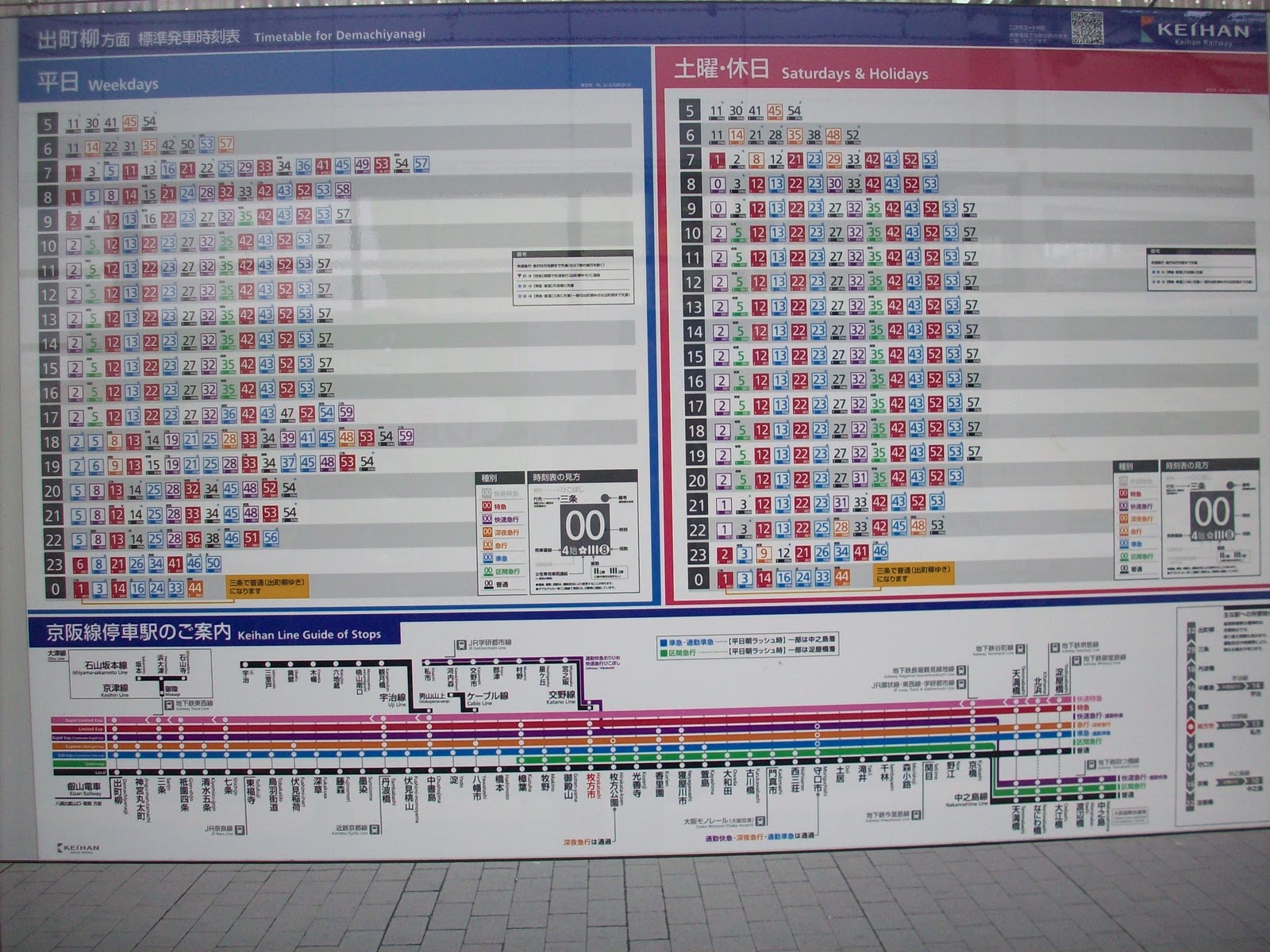

When the train comes you just walk on, then you have to listen for your stop. If you miss your stop all you have to do is get off and take the next train back to your stop. Sometimes this involves talking to the man at the ticket booth who will stamp your ticket then you can go the the other gate and show it to the other ticket man. Remember your desired destination name, it makes everything so much easier. When you get to where you want to go you get off and go to the gate (which is usually found by following the crowd), and you put your ticket into the machine which eats it. If you haven't paid enough you have to go adjust your fare with the ticket man.
That is basically how it is done.
Thursday, October 28, 2010
My Host Family's Home
I think that when I imagined a Japanese home I saw some minimalistic, obsessively clean house. My host mother's house is not like that at all. It is rather reminiscent of any older couple's house, who has had sixty some odd years to accumulate stuff. The house is quite large for a Japanese house. It is a house that has been lived in by multiple generations, and so is an older traditional house.
 This is my bike in front of the house. The Laundry is done almost daily, and hung out to dry in front of the house. My host family has a dog. Sado looks very cute, but he isn't very friendly and he is prone to snap. He is also hard of hearing, so until he sees someone he doesn't start to bark, but He really likes to bark.

 When you first enter the house you come into the genkan.
 Okasan does ikebana, and there are always flower arrangements in the genkan.
Behind the genkan is the kitchen where we also eat.
 This is normal, but somewhat messy. Food is frequently left out overnight on the dining table, even meat. This is very typical for Japanese people. I usually get four of five small plates of food for dinner.
To the right of the genkan is the living room. This is messier than usual.
 She cleaned the table later that day.
To the left of the genkan is a room that used to be a sleeping room, I think, before they built bedrooms on.
 It is mostly used for storage now, I think. There is a room to the right if this that is definitely storage. The door to it is almost never open. Through this room is the bedrooms.
 The toilet is at the end of the hall. My room is next to the toilet. There is really nothing but the toilet and a hand washing sink in that room.
The bath is off of the kitchen.

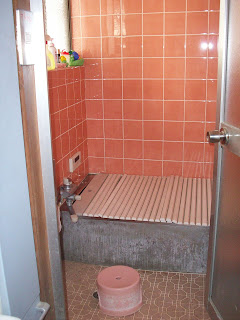 there is a large sink and mirror in one room, and next to it is the bath. The bath has an approximately 2 ft deep tub, and a shower head on a hose. You never get right into the bath, because everyone uses the same water. First you have to wash yourself off. You sit on the little stool, and wash yourself, and make sure you rinse very well, then you can soak in the Ofuro if you like.

 My room is next to the toilet. My room is somewhat messy too.
And that is my house.


Okasan likes to garden in the yard. Most of the gardening is done in containers.


Behind the genkan is the kitchen where we also eat.

To the right of the genkan is the living room. This is messier than usual.

To the left of the genkan is a room that used to be a sleeping room, I think, before they built bedrooms on.


The bath is off of the kitchen.


And that is my house.
Monday, October 18, 2010
Around Campus
The first week that you come to Kansai Gaidai you will stay in the Seminar Houses. You get to walk back and forth between campus to go to Orientation. In Orientation you get told all the information that you could possibly need about Campus.
I am going to tell you about the things that you do daily.
First The Center for International Education (CIE).


You have your classes here, this is a speaking classroom.


You pick up your school mail here.
 You can use the internet and printers here. There is also wifi which is decent if there are not to many people trying to use it.
 If you have any questions about anything you can ask The CIE staff here.
 This is the Language Lab for listening and speaking practice.
 We also have our other classes here in the CIE. This is my ceramics classroom. There is also Sumie (brush painting), but I am not in that class. The culture and business classes are on the fourth floor. Language classrooms are in the second floor and the teacher's offices are on the third floor.
When you are not at the CIE you are probably eating.
 The first option is the cafeteria, which is very decently priced, and has good food. There is a table at the front with the day's options.
 If you don't want to eat there there is the Convini, and McDonald's across the way.
 If you don't want to eat indoors you can eat outside
 If you don't have money you can use one of the ATMs. They are on either side of the amphitheater.

The Post Office Bank can be used if you have a checking account with a 4 digit pin number and a cirrus of plus on your bank card. The post office bank is every where in Japan, so it is very handy.
I am going to tell you about the things that you do daily.
First The Center for International Education (CIE).

This is where you practically live.


You wait in the CIE student lounge between classes.


When you are not at the CIE you are probably eating.


The Post Office Bank can be used if you have a checking account with a 4 digit pin number and a cirrus of plus on your bank card. The post office bank is every where in Japan, so it is very handy.
Monday, October 11, 2010
Pictures...
For those of you who are tired of all my complaining here are some pictures.




 |
| These are the most wonderful invention ever! They are layers of pastry, chocolate, sweet bean, and apple. only 80Y. |
 |
| I love Japanese Bakeries |
 |
| In Kyoto |


 |
| I saw this on the way home. It was rather disturbing as the chopsticks go up and down. I had a video, but I can't find it. |
 |
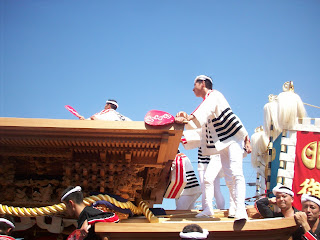
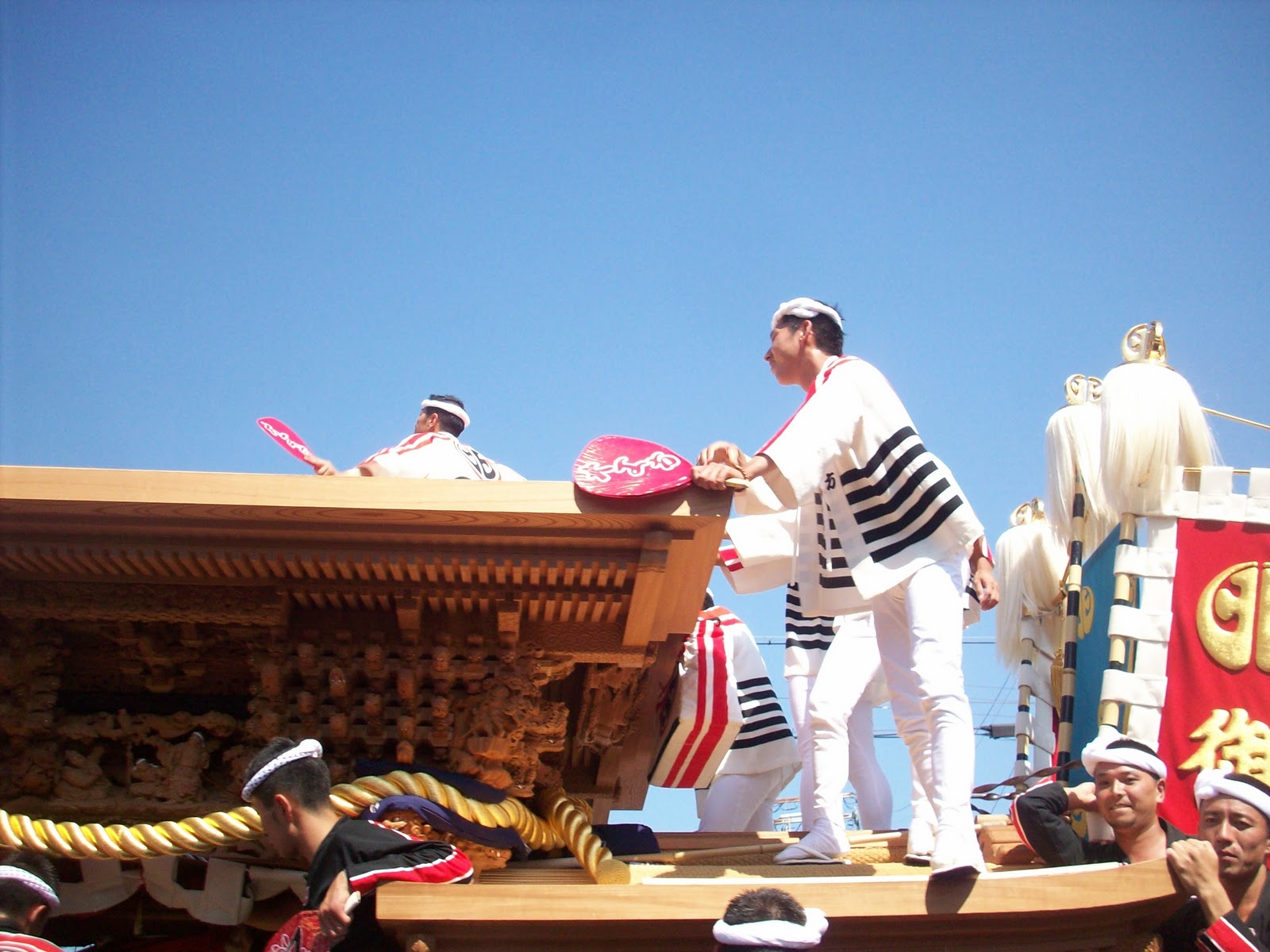
| These pictures are from the Danjiri Matsuri, in the south of Osaka. The different neighborhoods each have a cart which they pull through the streets alternately fast and slow. |


 |
| We also visited the local castle. |

 |
| This is not a model, it is a view from the top of the castle. |


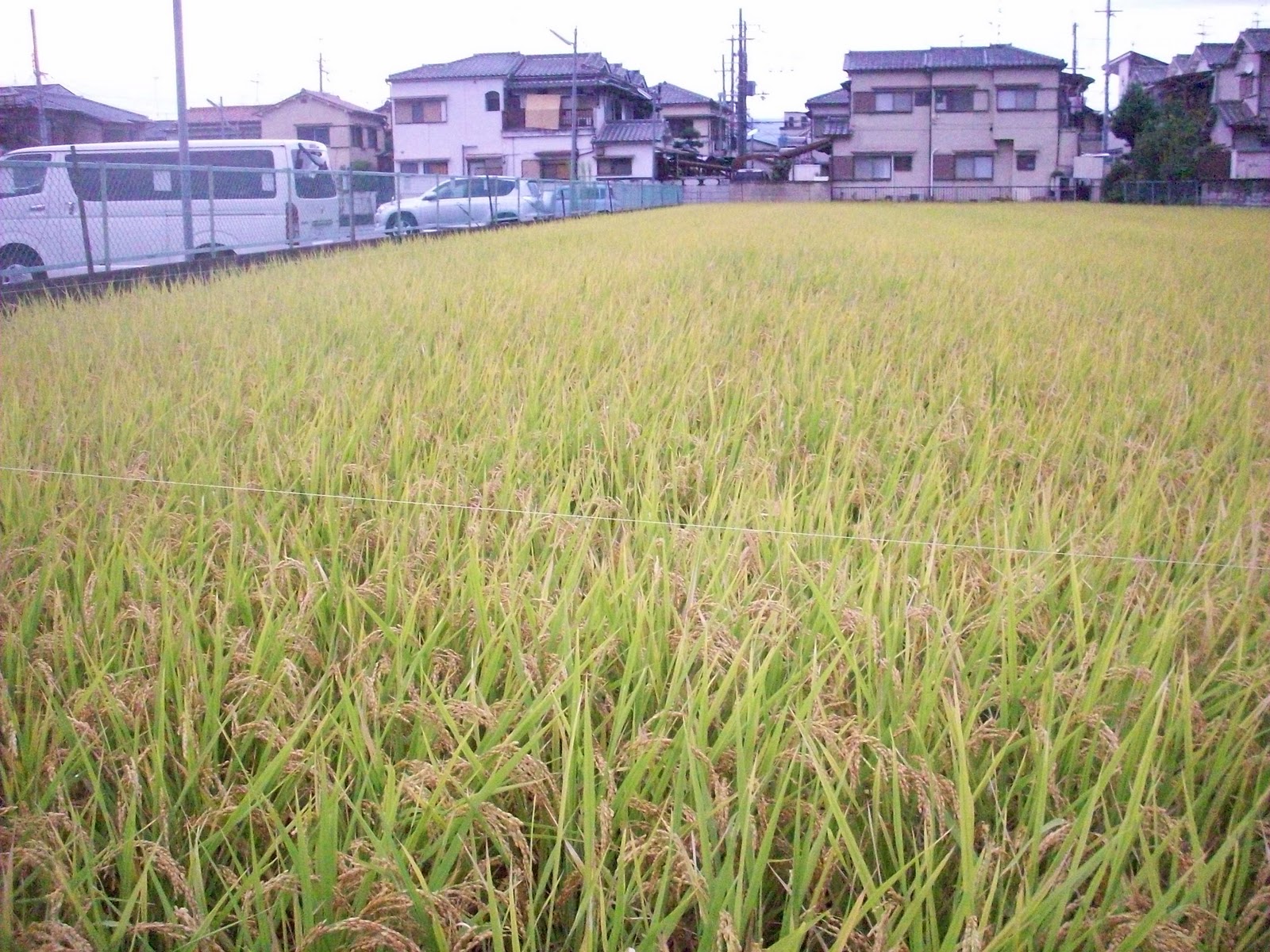

 |
| This picture was taken about a week after the other pictures. It was rather shocking to me to find the field this way. |

 |
| These fish are as long as my arm. |


 |
| Takoyaki! Be Careful, I always burn my mouth. |
 |
| Ferris Wheel in Osaka on top of the Mall |


 |
| outside of Osaka Jo |
 |
| Osaka Jo Get there before 4:30 because it closes! |
 |
| Kitty! |
Subscribe to:
Posts (Atom)